

Ever seen your dog get excited when you eat berries? You might wonder if blueberries are good for them. Blueberries can be a tasty, healthy treat for dogs.
But always check with your vet first. This is true for puppies, seniors, dogs with health issues, or those on special diets. Your vet will tell you if it’s safe to give them extra treats.
So, can dogs have blueberries? Yes, most dogs can have them in small amounts. They’re full of good stuff like antioxidants, fiber, and vitamins.
This guide will show you the safest options. We’ll talk about why processed berries might not be the best. You’ll also learn about blueberries in dog food versus fresh ones at home.
We’ll cover digestion, how to give blueberry treats safely, and the 10% treats rule. Plus, we’ll discuss when blueberries might not be good for your dog.
Table of Contents
Are blueberries safe for dogs?
When you’re picking out safe fruits for dogs, you might wonder about blueberries. Generally, yes, they are safe. Just make sure they’re plain and in small amounts.
Dogs process food differently from humans. Even healthy foods can upset their stomachs. Be careful with blueberries because they can be a choking hazard for dogs that gobble food quickly.
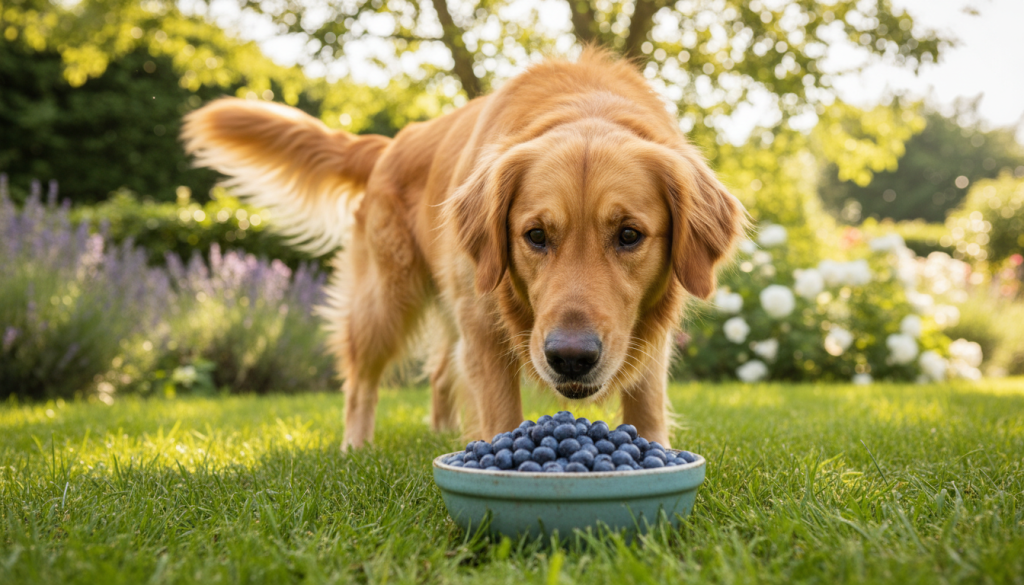
Fresh and frozen are the safest options
Fresh blueberries are a great snack for dogs. Rinse them well and remove stems. If your dog is small, you might need to cut or mash them.
As for frozen blueberries, most dogs can have them too. They can be refreshing for dogs, but always choose unsweetened options.
Why canned, sweetened, and flavored blueberries are a bad idea
Canned blueberries and sweetened products are not good for dogs. They can be too sweet and have harmful additives. This can upset your dog’s stomach.
Flavored yogurt and sweet treats are also risky. Some may have xylitol, which is toxic. Baked goods like muffins can have extra fats and dangerous ingredients like chocolate.
Wild blueberries vs. look-alike berries that can be toxic
Wild blueberries are okay in small amounts. But foraging can be dangerous. Dogs can’t tell the difference between safe and toxic berries.
Nightshade berries look like blueberries but are toxic. Other wild berries, like salmonberries, might also be unsafe. It’s best to keep your dog away from unknown berries and save berry snacks for home.
Are blueberries good for dogs?
Are blueberries good for dogs? Yes, they can be a great snack if you give them in small amounts. They’re easy to count and fit well into your dog’s treat routine.
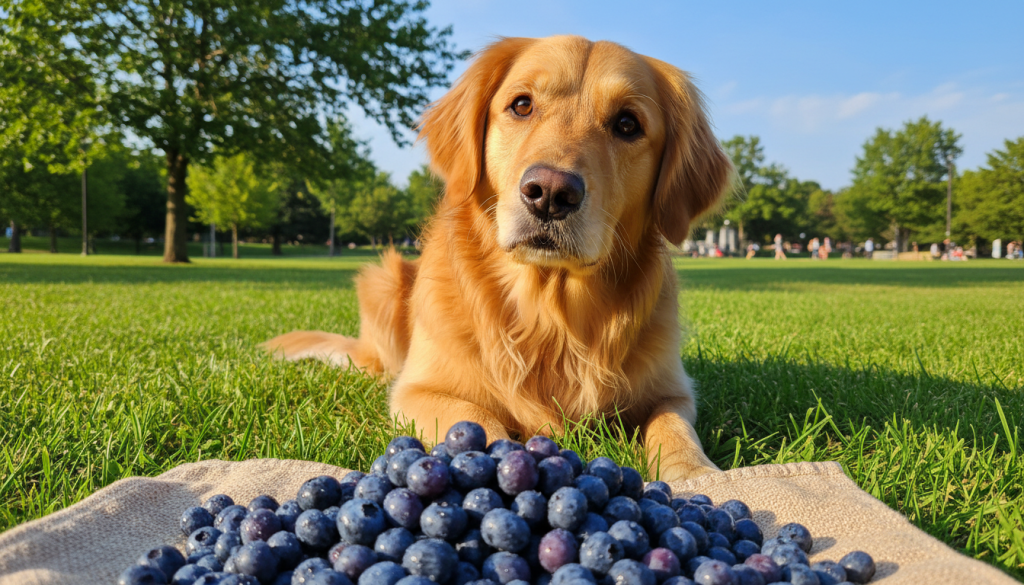
Antioxidants and phytochemicals that help fight cell damage
People love blueberries for their natural plant compounds. These compounds help protect cells from damage caused by daily stress.
Blueberries also contain phytochemicals and polyphenols. These are linked to fighting diseases like cancer and heart disease. Some of these compounds have antibacterial and anti-inflammatory effects, helping your dog’s overall health.
Low-calorie, high-fiber treat benefits for weight management
Blueberries are great for dogs that need a light snack. One cup has about 80 calories, with 65–75 berries. So, one berry is just over 1 calorie.
They’re also high in fiber, which is good for your dog’s health. Because they’re small, you can give them more often. This helps keep your dog’s daily calorie intake in balance.
Vitamins and minerals in blueberries that support whole-body health
Blueberries have vitamins like C for immune health, A for eyes, and K for blood clotting. They also have minerals like calcium and potassium. These support bones, muscles, and body function.
Using blueberries as treats adds flavor and nutrition without extra fat. This makes them a favorite in many treat jars.
Benefits of blueberries for dogs
You want treats that do more than taste good. Blueberries offer vitamins, fiber, and plant compounds. These support your dog’s daily wellness without adding many calories.
Immune and wellness support from vitamin C and antioxidants
Blueberries are packed with vitamin C, boosting your dog’s immune system. They also have antioxidants that fight cell damage from daily stress and metabolism.
For many dogs, blueberries can be part of a simple plan for immune support. Just remember to keep portions small and use them as treats, not meals.
Eye and aging support, including night vision and senior mental function
Blueberries are good for your dog’s eyes, including night vision. They also have vitamin A, which supports healthy vision and eye function.
Blueberries are also great for senior dogs’ mental health. Their antioxidant-rich profile supports aging bodies and brains, helping your dog stay sharp as they age.
Heart health and anti-inflammatory support tied to phytochemicals
Blueberries contain phytochemicals that may protect against heart disease. These compounds also have anti-inflammatory effects, making blueberries a good choice for dogs.
There’s a dental benefit and a drawback to blueberries. They can protect the mouth from disease, but may stain teeth. After giving your dog blueberries, offer fresh water to rinse their mouth and keep their teeth clean.
Blueberries for dogs digestion
Blueberries can be a gentle treat for dogs if given in small amounts. Start with a few pieces and observe your dog’s reaction. This will help you decide if it’s safe to make it a regular treat.
How fiber can support healthy stools in the right portions
Blueberries have fiber, which helps move food through the digestive system. In small amounts, this can lead to firmer, more regular stools for dogs.
But, be careful not to give too many. Too many blueberries can cause digestive issues instead of benefits.
What happens if your dog eats too many blueberries
If your dog eats too many blueberries, it can cause problems. The natural sugar and fiber mix can lead to diarrhea, gas, or an upset stomach. This is more likely in smaller breeds or dogs with sensitive stomachs.
Even though blueberries are a good snack, too many can add extra calories. If your dog shows severe symptoms, lasts for more than a day, or won’t drink water, seek vet advice.
Signs of stomach upset to watch for after introducing berries
Introduce new foods, like berries, slowly and in small amounts. This way, you can quickly notice any changes. Watch for these signs after giving berries:
- Loose stool, sudden urgency, or repeated accidents
- Gurgling belly, extra gas, or licking lips
- Less interest in food, or mild nausea
- Itchy skin, redness, or hives (allergies are rare, but possible)
If you see any of these signs, stop giving berries and let your dog’s stomach recover. Once it’s back to normal, you can try again with a smaller amount. Or, skip them if your dog doesn’t do well with them.
How to feed blueberries to dogs
Feeding blueberries to dogs is all about preparation and portion control. If you’re curious about how to feed blueberries to dogs, start with clean fruit. Make sure the texture is right for your dog’s eating habits.
Wash thoroughly and remove stems to reduce choking risk
First, wash blueberries for dogs under cool water. This removes dirt, pesticides, and sticky stuff from the skin.
Then, remove stems and throw away any bad berries. Stems can be hard to chew and are a blueberry choking hazard that small dogs face.
If your dog eats quickly, cut blueberries in half or mash them. This helps avoid blueberry choking hazards for small dogs during treats or training.
Serve them fresh, frozen, mashed, puréed, or dehydrated at home
Fresh and frozen berries are good, but in small amounts. Frozen blueberries are a cool, crunchy treat.
- Mashed blueberries: add to kibble for flavor and scent.
- Puréed blueberries: mix with dog-safe fruits like banana or strawberries.
- Dehydrated blueberries for dogs: make at home, but offer fewer pieces due to sugar concentration.
Be careful with store-bought dried blueberries. Many have added sugar or preservatives, making them less healthy for dogs.
Fun, dog-safe toppers and mixes like plain, sugar-free, xylitol-free yogurt
For a creamy mix, use dog-safe xylitol-free yogurt. Avoid flavored yogurts with added sugars and xylitol, which is toxic to dogs.
- Swirl berries into dog-safe yogurt, xylitol-free, and freeze for quick rewards.
- Stuff mashed berries into a KONG toy or spread on a Frisco Silicone Treat Lick Mat.
- Freeze blends in a Woof Pupsicle Treat Tray Mold for extra fun.
For a richer treat, add a bit of dog-safe peanut butter like Bark Bistro Company Buddy Budder. You can also find blueberries in treats like Pupford Blueberry Freeze-Dried Dog Treats, great for on-the-go.
How many blueberries can a dog eat?
Wondering how many blueberries your dog can have? Start with a small taste and gradually increase. Blueberries are small, sweet, and fun, making it easy to overdo it.
Think in terms of calories, not just the number of berries. This helps prevent treats from replacing your dog’s needed nutrition from a balanced diet.
The 10% treats rule and why it matters for your dog’s diet
The 10% treats rule means treats should not exceed 10% of your dog’s daily calories. The remaining 90% should come from a balanced dog food, which is essential for a measured diet.
Blueberries are treats, even though they’re fruit. Using portion control helps avoid weight gain and keeps meals consistent.
Daily portion guidelines by your dog’s size
Here’s a general guide for blueberry servings, adjusting for activity level and total treats. If you give daily blueberries, keep other treats simple and low-calorie.
- Extra-small (2–10 lb): 1–2 blueberries daily
- Small (11–20 lb): 2–3 blueberries daily
- Medium (21–50 lb): 3–5 blueberries daily
- Large (51–90 lb): 5–6 blueberries daily
- Extra-large (91+ lb): 6–10 blueberries daily
If your dog is on a special diet or has health issues, your vet can adjust the amount for your dog’s needs.
When to reduce portions for puppies, seniors, or sensitive stomachs
Puppies and seniors can enjoy berries, but start with a smaller amount. Watch for any changes in stool for a couple of days before increasing.
If your dog has a sensitive stomach, introduce berries slowly. Cut back if you notice loose stool or gassiness. Keeping portion control in mind helps find a comfortable routine.
When blueberries might not be a good choice for your dog
Before adding blueberries to your dog’s meal, think twice. They have natural sugar, which can raise blood sugar levels. Your vet can advise if they’re safe and how much to give.
Be cautious with dogs on special diets. Adding blueberries can upset the balance of their food. This is a clear time to avoid blueberries unless your vet says it’s okay.
Some dogs don’t do well with fruit. If your dog gets gassy or has a sensitive stomach, blueberries might cause diarrhea. They could also be a choking hazard for small dogs. Halving or mashing them can help, but it’s safer to skip them if your dog has trouble with small foods.
Also, be aware of rare allergies. A dog’s allergy to blueberries can cause itching, hives, or vomiting. If you see any of these signs, stop giving blueberries and call your vet. Avoid giving your dog foods like muffins or sweetened yogurt, as they may contain xylitol, which is toxic.
Note: This article is for informational purposes only and does not replace professional veterinary advice. Always consult a vet for an accurate diagnosis and treatment for your pet.