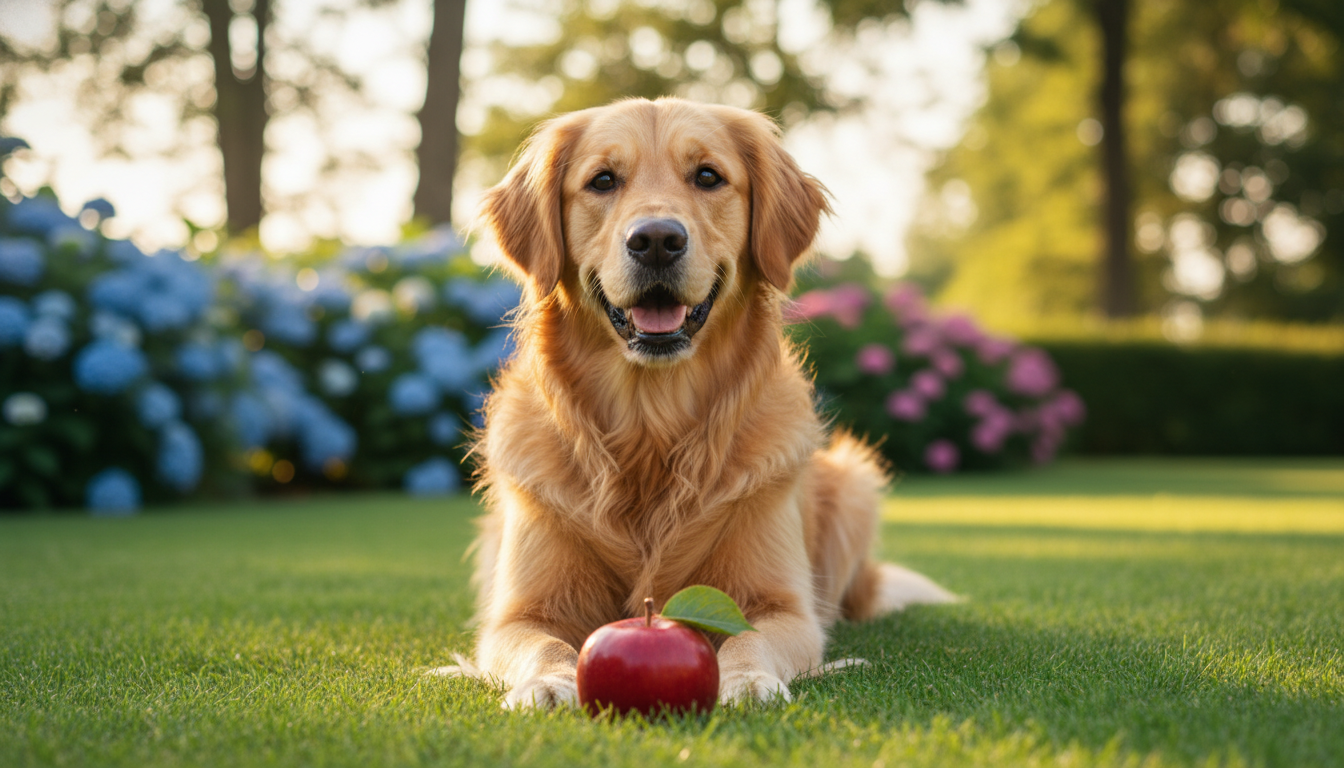
If you’ve ever sliced an apple and felt a pair of hopeful eyes on you, you’re not alone. Many pet parents ask, can dogs eat apples, and the good news is that apples are generally safe for most dogs when you serve them the right way and in moderation.
Still, dogs and apples aren’t a one-size-fits-all match. Your dog’s age, weight, health history, and daily diet matter, especially if your vet has flagged issues like diabetes or a sensitive stomach.
Start with a simple safety baseline: serve fresh, plain apple, and skip anything baked, sweetened, or spiced. That means no apple pie filling, no sugary toppings, and no foods made with artificial sweeteners.
Before you share, remove the seeds, core, and stem. Apple seeds contain trace amounts of cyanide, and the core can be a choking risk or hard to digest.
In this guide, you’ll learn where apples fit among safe fruits for dogs, what benefits they may offer, and what risks to watch for, like digestive upset. You’ll also get practical tips for U.S. grocery-store apples, including washing for residue and choosing a smart way to add apples to your dog’s treat rotation.
Table of Contents
Can Dogs Have Apples as a Healthy Snack?
If you want a crisp, simple treat, apples can fit well into your routine. When you think about safe fruits for dogs, apples are popular because they’re easy to find and easy to portion.
Quick safety answer for dogs and apples
Yes, dogs can have apples as a snack when you prep them the right way. For dogs eating apples, remove the core, seeds, and stem, then offer small, plain slices or chunks.
Even with good prep, apples aren’t risk-free. Too much can lead to gas, a bellyache, or loose stool, so start small and watch how your dog handles it.
Why apples work best as an occasional treat, not a meal
Feeding dogs apples works best when you treat them like a bonus, not a replacement for dinner. Your dog still needs the balanced nutrition in a complete dog food, while treats should stay limited.
If your dog eats a prescription diet or has a health issue like diabetes, check with your veterinarian before adding extras. That guidance matters, even when you’re choosing safe fruits for dogs.
Apple varieties you can share (Red Delicious, Honeycrisp, Gala, Granny Smith)
Most grocery-store apples are fine for dogs eating apples, as long as they’re washed and properly cored. Red Delicious, Honeycrisp, Gala, and Granny Smith can all work.
- Honeycrisp and Gala are sweet and crunchy, so keep portions modest.
- Granny Smith is more tart, which some dogs like and others skip.
- Red Delicious is softer, which can be easier for gentle chewers.
No matter the variety, feeding dogs apples should stay simple: plain fruit, bite-size pieces, and a pace your dog can handle.
Benefits of Apples for Dogs Health
When you want a simple, crunchy treat, apple slices can fit into your routine. The benefits of apples for dogs come from a mix of water, fiber, and key nutrients that can support everyday wellness when served in small amounts.
Fiber for digestion and regular bowel movements
One of the biggest benefits of apples for dogs is fiber. Fiber can help keep digestion moving and support regular bowel movements.
It may also help steady blood sugar after treats, but dogs can be sensitive to extra fiber. If you give too much, your dog may end up with gas or a loose stool.
Vitamins and nutrients (vitamin C, vitamins A and K, plus minerals like iron and zinc)
Apples for dogs health can get a small boost from vitamins and minerals in the fruit. Apples offer vitamin C, vitamins A and K, plus minerals like iron and zinc that help round out a treat.
Most dogs already make enough vitamin C on a complete and balanced diet. Still, a few apple bites can add variety without going heavy on rich ingredients.
Low-calorie, low-fat treat option compared to many processed treats
If you’re watching treat calories, apples can be a smart swap. Compared with many processed snacks, they’re naturally low in calories and fat, which is another point on the list of benefits of apples for dogs.
Crunchy texture that can feel rewarding without extra grease
Fresh taste that works well for training breaks or after walks
Natural carbs for a quick energy boost before play
Apples contain natural carbs and sugars that can offer quick energy before a game of fetch. For many dogs, a small serving supports steady play without the heaviness of richer treats, which can help overall apples for dogs health.
To keep the benefits of apples for dogs simple and gentle, think “a few bites,” not a big bowl. That way your dog gets the perk without the tummy trouble.
Risks and Precautions When Feeding Dogs Apples
Dogs and apples can be a smart combo, but a few details matter. When feeding dogs apples, your goal is to keep each bite simple, small, and safe.
Apple seeds contain trace amounts of cyanide and should be removed
Apple seeds have trace amounts of cyanide, so take them out every time. The risk goes up if seeds are chewed and swallowed, or if a dog eats a lot of them.
If you notice dogs eating apples that still have seeds, keep an eye out for stomach trouble and call your veterinarian if you’re worried.
Apple core and stem can be choking hazards and hard to digest
The core and stem are tough and can be hard to break down. They can also get stuck in your dog’s throat, especially with fast eaters.
When feeding dogs apples, skip the core and offer only the fleshy part in bite-size pieces.
Too much apple can cause bellyache, diarrhea, or digestive upset
Even healthy snacks can backfire if you serve too much. With dogs eating apples, extra fiber can lead to bellyache, gas, or diarrhea.
If your dog has a sensitive stomach, start small and wait a day before offering more.
Extra caution for dogs with health conditions like diabetes (natural sugars still add up)
Apples have natural sugar, and it still counts in your dog’s daily intake. For dogs with diabetes or weight issues, dogs and apples may not be an everyday match.
If your dog grabs a core, eats a pile of slices, or you see signs like choking, repeated vomiting, belly swelling, or no bowel movements, contact your veterinarian for next steps.
How to Prepare Apples for Dogs Safely
When you’re feeding dogs apples, a little prep keeps snack time simple and calm. Done right, apples as dog treats feel like a fresh reward, not a worry. They also fit nicely into your list of safe fruits for dogs when you keep the pieces clean and easy to chew.
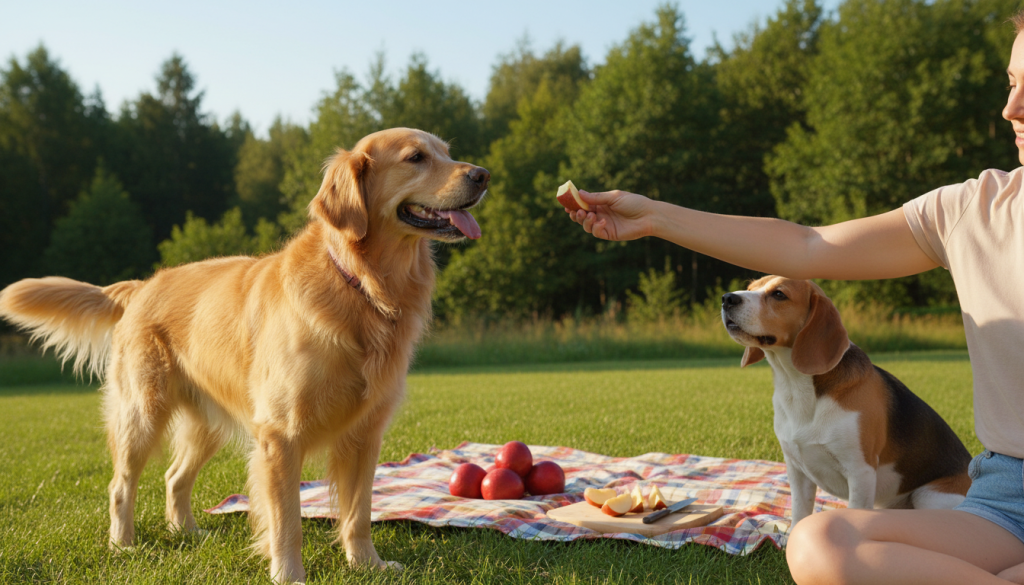
Wash and scrub to remove dirt, germs, and potential pesticide residue
Rinse the apple under cool running water, then scrub the skin with your hands. This helps lift dirt and germs that can cling to supermarket produce. If you use apples as dog treats often, washing well is a quick habit that pays off.
Core completely and remove seeds and stem
Cut around the core and remove it fully before you share any bites. Make sure no seeds or stem pieces are left behind, even small ones. This step matters any time you’re feeding dogs apples, since those parts don’t belong in your dog’s bowl.
Slice into bite-size pieces to reduce choking risk
Slice the apple into thin wedges, then chop into small cubes if your dog gulps food. Smaller pieces are easier to chew and help with portion control. It also makes apples as dog treats feel more like training rewards than a big snack.
- Small dogs: thin slices or tiny cubes
- Medium dogs: small chunks you can pinch between two fingers
- Large dogs: bite-size pieces, not whole wedges
Peel the apple if your dog has a sensitive stomach or struggles with the skin
Apple skin is fine for many dogs and adds fiber, but it can be tough on a sensitive belly. Peeling can also help if the peel gets stuck between teeth or if extra fiber makes stools too loose. If you’re building a rotation of safe fruits for dogs, adjusting the peel is an easy way to match your dog’s comfort.
How Much Apple Can Your Dog Eat?
If you’re asking can dogs eat apples and how much is safe, think of apples as a crunchy treat, not a daily staple. Your dog’s regular food should still do most of the nutrition work. The goal is to keep dogs eating apples in a way that supports good habits, not upset stomachs.
Moderation rule: treats should stay under 10%
A simple guideline for feeding dogs apples is the 10% rule. All treats combined, including apple slices, should be no more than 10% of your dog’s daily calories. The other 90% should come from a complete, well-balanced dog food.
Even with a healthy snack, too much at once can backfire. If your dog gets gassy, has a bellyache, or loose stool, scale back to just one or two bites.
Portion guide by size: pieces per day
Use pieces about 1 inch wide and 1/4 inch thick. This keeps portions easy to count and helps with safe dogs eating apples at snack time.
- Extra-small dogs (2–10 lb): 1–2 pieces daily
- Small dogs (11–20 lb): 2–3 pieces daily
- Medium dogs (21–50 lb): 3–4 pieces daily
- Large dogs (51–90 lb): 4–5 pieces daily
- Extra-large dogs (91+ lb): 5–6 pieces daily
If you’re unsure where your dog fits, start on the low end. This is also smart if your dog needs weight control or is on a prescription diet.
First-time feeding: start small and watch
When you first try feeding dogs apples, offer one slice or a small cube. Then watch your dog for the next day for diarrhea, vomiting, itching, or an upset stomach before you add more.
If you’re still wondering can dogs eat apples with your dog’s health history, ask your veterinarian. That’s especially important if your dog has diabetes or other conditions where sugar and calories matter.
Can Puppies Have Apples and When to Be Extra Careful
As your puppy explores new tastes, you may wonder, can puppies have apples without trouble. They can, but you’ll want to be picky about size and texture. When you’re focused on feeding dogs apples safely, think small, soft, and easy to chew.
Small, soft, bite-size pieces for puppies learning to chew
Cut apple into thin slices or tiny cubes, then offer one piece at a time. Skip hard chunks that can get gulped. If your puppy is teething or tends to inhale food, let the apple warm to room temp so it’s less firm.
Keep it plain and simple. Apples can fit alongside other safe fruits for dogs, but your puppy’s diet still needs to stay puppy-focused.
How to monitor for digestive issues or allergic reactions
Start with a very small taste, then watch your puppy for the next day. With feeding dogs apples for the first time, mild gas can happen, but you shouldn’t see ongoing discomfort.
- Digestive upset: loose stool, diarrhea, vomiting, or a tight belly
- Allergic signs: facial swelling, hives, intense itching, or repeated pawing at the mouth
- Behavior changes: sudden lethargy, refusing meals, or restlessness
If you’re also offering other safe fruits for dogs, introduce them one at a time. That way, you can tell what didn’t sit right.
When you should pause and contact your veterinarian
Stop giving apple right away if your puppy seems unwell after a bite. Call your veterinarian if symptoms don’t improve quickly, if vomiting or diarrhea is repeated, or if you notice any swelling or breathing trouble.
If your puppy has a sensitive stomach, a special diet plan, or a medical history, check with your veterinarian before you decide how often you’ll include apples. It’s the simplest way to keep your answer to can puppies have apples a confident yes.
Apples as Dog Treats: Serving Ideas and What to Avoid
When you’re looking for easy, low-fuss snacks, apples as dog treats can fit into your routine. Keep portions small, stick to plain fruit, and treat it like a bonus—not a meal.
Simple treat ideas: fresh slices, food topper, or frozen enrichment (like a stuffed KONG)
- Fresh slices: Offer thin slices or small cubes for a quick crunch.
- Food topper: Chop or lightly mash apple and mix a spoonful into your dog’s regular food.
- Frozen enrichment: Blend apple with dog-safe fruits like banana, blueberries, or strawberries, then pack it into a KONG and freeze overnight.
- Creamy mix-in: Mix apple with plain yogurt only if it’s xylitol-free, then spread it on a Frisco Silicone Lick Mat or freeze it in a KONG.
Plain, unsweetened applesauce in moderation (avoid added sugar)
For dogs and apples in a softer form, choose applesauce for dogs that’s plain and unsweetened. Many store cups add sugar, which you don’t need.
You can freeze a little applesauce for dogs in an ice cube tray for a cooling treat after a walk. A small lick is often plenty, especially for smaller dogs.
Homemade options: roasted apple chips baked at 200°F for about two hours
If you want a crunchy option, make roasted apple chips at home. Core the apple, slice it thin, and bake at 200°F for about two hours until fully crisp.
Because drying concentrates sugar, keep chips as apples as dog treats, not a big handful.
What not to share: apple pie (added sugar) and nutmeg (myristicin toxicity risk)
Skip apple pie. The added sugar and rich crust can be rough on your dog’s stomach and waistline.
Avoid nutmeg, too. Pet Poison Helpline notes nutmeg contains myristicin, which can upset the stomach in small amounts and cause serious signs in very large amounts.
Ingredient safety reminders: avoid artificial sweeteners like xylitol (toxic to dogs)
Read labels on any packaged snacks tied to dogs and apples, including sauces and dried fruit. Avoid artificial sweeteners, especially xylitol, which is toxic to dogs.
Also watch for dehydrated apple products with added sugar or preservatives. When in doubt, stick with plain applesauce for dogs or fresh apple pieces.
Conclusion
If you’ve been wondering, can dogs eat apples, the answer is yes for most healthy dogs. You just need to treat apples like a simple snack, not a meal. When you keep it plain and fresh, the benefits of apples for dogs can fit into a balanced routine.
For safe feeding dogs apples, start with the basics: wash the fruit well, then remove the seeds, core, and stem. Cut it into bite-size pieces so your dog can chew without gulping. Keep portions small, since too much can lead to a bellyache or diarrhea.
Use the 10% rule to stay on track, so treats don’t crowd out complete dog food. If your dog has diabetes or eats a prescription diet, talk with your veterinarian before feeding dogs apples often. Even natural sugars can add up fast.
When you share apples, choose fresh slices or plain, unsweetened applesauce instead of sugary desserts. Skip apple pie and avoid nutmeg, which Pet Poison Helpline lists as a myristicin risk. And always keep xylitol out of anything you offer, even “sugar-free” foods.
Note: This article is for informational purposes only and does not replace professional veterinary advice. Always consult a vet for an accurate diagnosis and treatment for your pet.