
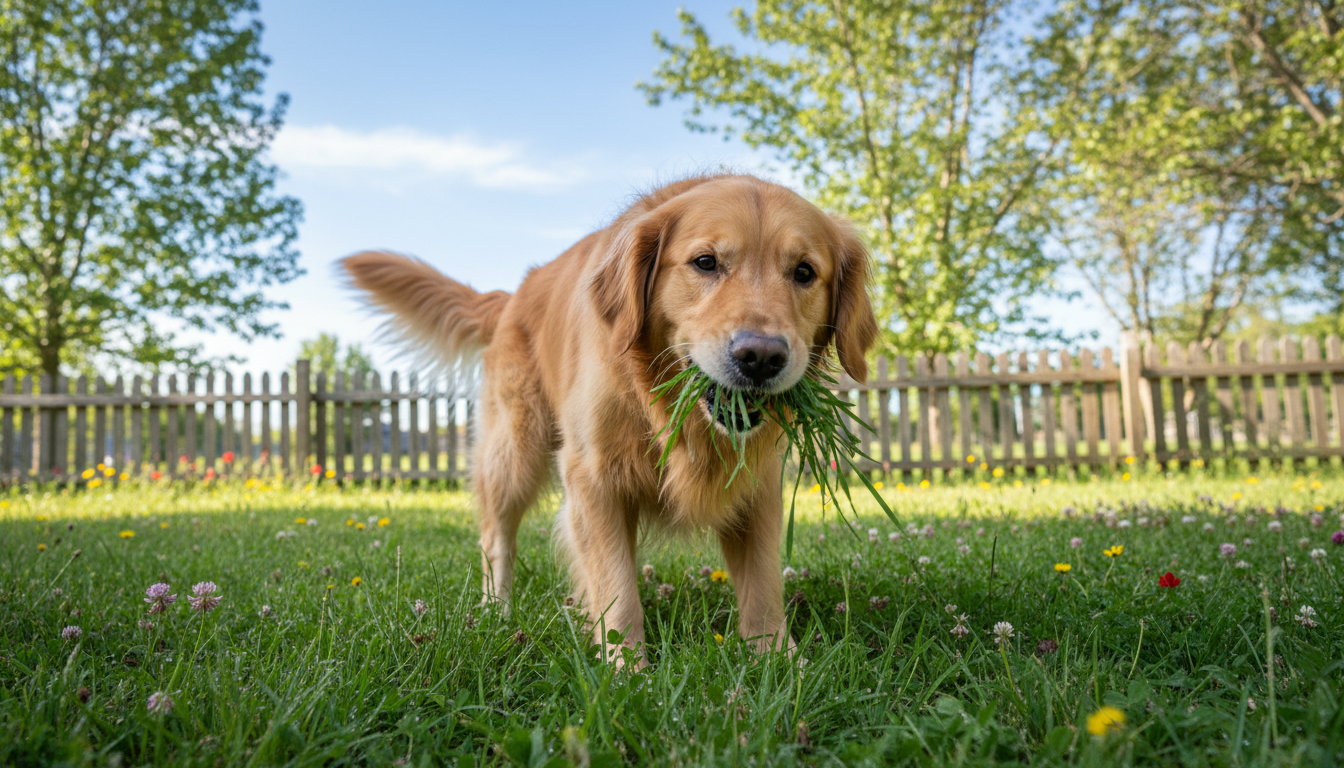
Watching your dog eat grass in the backyard might seem odd at first. But, it’s a common sight for many pet owners. Most vets say that dogs eating grass is just part of their natural behavior.
There are a few reasons why dogs might graze. It could be an instinct or a way to explore new smells and tastes.
Understanding why do dogs eat grass can make pet owners feel more at ease. This behavior is usually not a sign of illness or a big safety risk.
Table of Contents
Understanding Your Dog’s Grass-Eating Habit
Dogs eating grass is common and raises health questions. It’s important to know why they do this to keep them healthy.
There are many reasons dogs eat grass, like instinct, diet, and behavior. Knowing these reasons helps figure out if it’s safe for your dog.
Reasons Behind Grass Eating
Many theories try to explain why dogs eat grass. Some say it’s because of their wild ancestors eating grass. Others think it might be for fun or to fill a nutritional gap.
Even though we don’t know for sure, knowing the possible reasons helps dog owners. It lets them see if their dog’s grass-eating is okay or if there’s a problem.
- Instinctual behavior inherited from wild ancestors
- Dietary supplementation or nutritional gaps
- Behavioral triggers such as boredom or anxiety
By looking into these reasons, dog owners can understand their dog better. They can then take steps to keep their pet healthy and happy.
Is Eating Grass a Normal Dog Behavior?
Many dog owners have seen their pets eating grass. They often wonder why this happens. It’s a common question about canine behavior.
A 2007 study shed some light on this. It found that dogs eat grass for different reasons. Hunger and the time of day play a role. This means dogs might eat grass due to instinct or their internal state.
Veterinary insights into grass-eating behavior show it’s common among dogs. The reasons vary, but understanding it is key for pet owners. It helps keep their pets healthy and happy.
Eating grass is seen as normal in dogs. But, owners should watch their pets closely. This helps spot any health problems early.
Knowing why dogs eat grass helps owners act. They might change their dog’s diet or provide more activities. Keeping the yard safe from harmful substances is also important.
Why Do Dogs Eat Grass: The Main Reasons Explained
Dogs eating grass is a complex issue. It’s not just one reason. Instead, it’s a mix of their history, diet, and environment.
Studies on dogs and their eating habits have given us clues. Some think it’s a leftover from their wolf days. Wolves often eat plants, showing it’s natural for them.
Instinctive Dietary Supplementation
One idea is that dogs eat grass for instinctive dietary supplementation. In the wild, they eat their prey’s stomach contents. This gives them important nutrients and fiber. Domestic dogs might eat grass for similar reasons, to get more fiber or nutrients.
Natural Foraging Tendencies
Dogs are natural foragers. They might eat grass because it’s the closest plant to them. This is seen in many dogs, even those with good food.
Inherited Behaviors from Wild Ancestors
Eating grass could also be from their wild ancestors. Wolves and wild dogs eat plants. This could explain why domestic dogs still do it, even with commercial food.
Some main reasons dogs eat grass are:
- Instinctive dietary supplementation
- Natural foraging tendencies
- Inherited behaviors from their wild ancestors
Understanding these reasons helps us see why dogs eat grass. It’s a natural behavior for them, tied to their history and nature.
Grass Eating for Digestive Comfort
Many dogs eat grass, and it’s important for pet owners to understand why. Dogs might think grass helps their stomachs feel better. But why do they do this?
Dogs eat grass for different reasons, but one big one is for digestive comfort. They might be trying to help their stomachs or add something to their diet.
How Grass Helps Settle Upset Stomachs
Studies show dogs eat grass to calm upset stomachs. The fiber in grass might help with digestion or make them vomit to feel better. For example, a study on dogs and fructooligosaccharide (FOS) found it could be good for their digestion.
Fiber is key for dogs’ digestion, and grass is full of it. Even though we don’t know all the details, fiber in grass might help with bowel movements and soothe stomachs.
The Truth About Grass-Induced Vomiting
Many dog owners notice their pets vomit after eating grass. It’s thought that dogs might eat grass to make themselves vomit. But it’s not that simple.
Not all dogs vomit after eating grass, and it’s not just to make themselves sick. Other things, like the type of grass and the dog’s health, matter too.
Grass as a Natural Digestive Aid
Grass can be good for dogs’ digestion, giving them fiber and helping with bowel movements. Some vets think dogs eat grass to get more fiber or to feel better in their stomachs.
Adding fiber to a dog’s diet can help their digestion. Prebiotic fibers, like FOS, can make their gut healthier. This is important for their overall digestion.
Boredom, Anxiety, and Behavioral Triggers
Some dogs eat grass for reasons other than digestion. They might do it because they’re bored or anxious. Just like people biting their nails, dogs might eat grass out of habit or stress.
Dogs have both physical and emotional needs. If these needs aren’t met, they might start unwanted behaviors like eating grass. Knowing why they do this can help you stop it.
Lack of Mental and Physical Stimulation
Dogs need regular exercise and mental challenges. Without enough, they can get bored or anxious. This can lead to them eating grass. Make sure your dog gets enough exercise and playtime to prevent this.
- Increase daily walks and playtime.
- Engage your dog in interactive games and puzzle toys.
- Consider enrolling your dog in training or agility classes.
Stress-Related Grass Eating
Dogs can feel stress and anxiety just like humans. Changes in their environment can cause stress, leading to behaviors like eating grass. Find out what’s stressing your dog to help them feel better.
Common stressors for dogs include changes in routine, loud noises, or certain smells. Knowing these can help you reduce your dog’s stress.
Grass Eating as Attention-Seeking
Some dogs eat grass to get a reaction from their owners. If eating grass makes you react, they might keep doing it. Ignoring the behavior or redirecting it can stop it.
- When you catch your dog eating grass, calmly call them away.
- Reward your dog for responding to commands or engaging in alternative behaviors.
- Consistently ignore the grass-eating behavior to remove the reward of attention.
The Role of Diet and Nutritional Gaps
A well-balanced diet is key for your dog’s health. It helps explain why dogs might eat grass. Dogs need a mix of nutrients to stay healthy. If they don’t get what they need, they might eat grass.
Fiber Requirements in Your Dog’s Diet
Dogs need both animal and plant-based nutrients. Fiber from plants is important for their digestive health. Adequate fiber helps with bowel movements and prevents constipation, which might be why dogs eat grass.
Adding fiber-rich foods to your dog’s diet is a good idea. Sweet potatoes, green beans, and pumpkin are great. They’re full of fiber and important vitamins and minerals.
Recognizing Signs of Nutritional Deficiency
Nutritional gaps can show up in different ways. This includes changes in appetite, skin issues, or digestive problems. If your dog eats a lot of grass, it might mean they’re missing some nutrients. Watching your dog’s health and behavior is important to spot nutritional gaps.
Look out for dull coat, weight loss, or ongoing digestive issues. These could be signs of a nutritional problem. Talking to a vet can help figure out if your dog’s diet needs a change.
How Food Quality Affects Grass Eating
The quality of your dog’s food matters a lot. Good dog food with balanced nutrients can prevent nutritional gaps.
Choose dog food that’s full of whole foods, fruits, and veggies. Stay away from foods with too many fillers or by-products. A diet rich in nutrients can help your dog feel less like eating grass.
Taste, Texture, and Simple Enjoyment
Some dogs eat grass because they like the taste or feel of it. Young dogs, in particular, explore their world by mouth. Eating grass is just one thing they try out of curiosity.
This is similar to how some kids might eat dirt or other non-food items. For some dogs, the taste or feel of grass is enough to make them do it regularly.
Why Some Dogs Just Like the Taste of Grass
Dogs, like humans, have their own taste and texture preferences. Some dogs might find the freshness of new grass very appealing. The different types of grass, with their unique flavors and textures, could also attract dogs to eat it.
The enjoyment of grass can be a simple reason why some dogs eat it, without any health or nutritional issues. Dog owners should understand that not all grass eating is a problem that needs fixing.
Seasonal Changes in Grass Eating
Dog owners might notice their pets eat more grass at certain times. This could be because of changes in grass texture and taste with the seasons. For example, in spring, the fresh, lush grass might be especially appealing.
- In spring, the new growth might be more palatable.
- During summer, the heat might make certain types of grass more appealing as a cool snack.
- In other seasons, the reasons might be more related to the dog’s environment and activities.
Understanding these changes can help dog owners see why their dogs might eat grass at different times of the year.
What Veterinary Science Tells Us About Grass Eating
Why dogs eat grass is a mystery that vets are still trying to solve. This behavior is common among dogs. It might seem odd, but it’s been part of their nature for a long time.
Research Studies on Canine Grass Consumption
Many studies have looked into why dogs eat grass. They found that a lot of dogs do it, but for different reasons. Less than 25% of dogs vomit after eating grass, which means it’s not just to throw up.
Only about 10% of dogs seem sick before they eat grass. This makes it hard to figure out why they do it.
Veterinary Insights on Grass Eating Behavior
Vets have a few theories on why dogs eat grass. Some think it’s because of their wild ancestors. They ate grass and other plants from their prey.
Others believe it might be because dogs need more fiber in their diet. Or it could be a sign of a diet lacking something important.
Statistical Data on How Common This Behavior Is
Grass eating is quite common among dogs. Surveys and studies show that many dogs eat grass at some point. The exact number varies, but it’s clear it’s not rare.
Knowing how common it is helps dog owners understand if it’s normal or if there’s a problem. By looking at vet research, owners can make better choices for their pets’ health.
When Grass Eating Becomes a Cause for Concern
Dogs eating grass is usually normal. But, there are warning signs that owners should watch for. Some dogs may eat grass without any problems. Yet, other situations could mean there’s an issue that needs to be looked into.
Red Flags That Indicate a Problem
Keep an eye on your dog’s behavior and health if they eat grass. If they show signs of illness like vomiting, diarrhea, or feeling tired, see a vet.
Veterinary consultation is key if the grass has pesticides or insecticides. These can harm dogs.
Excessive or Obsessive Grass Eating
Eating too much grass might mean there’s a health issue. This could be due to stomach problems or not getting enough nutrients. Dogs might eat grass because they’re not getting something in their diet or feel uncomfortable.
- Watch how much grass they eat.
- Check if their appetite, energy, or stool changes.
- See a vet to check for health problems.
Symptoms That Warrant a Vet Visit
If your dog shows these signs after eating grass, go to the vet:
- Vomiting, especially if it keeps happening or has blood.
- Diarrhea or constipation.
- Lethargy or feeling down.
- Not wanting to eat.
Knowing these signs and acting fast is important for your dog’s health. Regular vet visits can also help keep your dog healthy and catch any problems early.
Hidden Dangers in Your Yard and Neighborhood
Dogs eating grass might seem harmless, but there are dangers to watch out for. As a dog owner, knowing these risks is key to keeping your pet safe.
Lawn Chemicals and Pesticide Risks
Many lawns use chemicals and pesticides that can harm dogs. These substances can get into the grass, making it risky for dogs to eat it.
- Herbicides: Chemicals to kill weeds can be harmful if dogs eat them.
- Insecticides: These can be toxic to dogs.
- Fertilizers: While meant to help grass, they can be dangerous if dogs eat them.
Toxic Plants That Grow Alongside Grass
Your lawn might have plants that are bad for dogs. These plants can be eaten by dogs when they eat grass.
Common toxic plants include:
- Dandelions (while not typically toxic, they can be contaminated with pesticides)
- Buttercups
- Certain types of clover
Parasites and Bacteria in Grass
Grass can have parasites and bacteria from animal waste or other sources.
Intestinal Parasites from Contaminated Grass
Parasites like hookworms, roundworms, and tapeworms can be in contaminated grass. They can harm your dog’s health.
Bacterial Infections from Outdoor Surfaces
Bacteria like E. coli and Salmonella can be on grass and other outdoor surfaces. They can cause infections in dogs.
Practical Steps to Manage Grass Eating
To stop dogs from eating grass, owners can take several steps. These include changing their diet, getting them more exercise, and using training methods. It’s all about a mix of these to help your dog.
Upgrading Your Dog’s Nutrition
A good diet is key to stopping dogs from eating grass. Make sure their food has all the nutrients they need. Talk to your vet to find the best food for your dog.
Key nutritional elements to consider:
- High-quality protein sources
- Adequate fiber content
- Essential vitamins and minerals
Adding Fiber-Rich Foods to Their Diet
Dogs might eat grass if they’re not getting enough fiber. Adding foods high in fiber can help. Try:
- Psyllium
- Beet pulp
- Vegetables like carrots and green beans
Start with small amounts to avoid stomach problems.
Increasing Daily Exercise and Enrichment
Dogs that are bored or have too much energy might eat grass. More exercise and mental games can help.
Ways to increase exercise and enrichment:
- Longer walks or more frequent walks
- Playtime activities such as fetch or agility training
- Interactive puzzle toys filled with treats
Training Techniques to Redirect the Behavior
Teaching your dog to ignore grass takes time and patience. Use positive methods to train them. Here’s how:
- Teaching the “leave it” command
- Using positive reinforcement with treats and praise
- Keeping your dog on a leash during walks
By using these methods, you can manage your dog’s grass-eating. This will keep them happy and healthy.
Creating a Dog-Safe Outdoor Environment
A dog-friendly yard is essential for pet owners. It ensures dogs’ safety while they explore their natural instinct to eat grass. Owners must take steps to minimize risks from this habit.
Maintaining a Chemical-Free Lawn
Keeping your lawn chemical-free is key to a dog-safe yard. Lawn chemicals and pesticides can harm dogs. Using organic lawn care methods reduces poisoning risks.
Choose natural weed control and fertilizers. Compost or manure tea are safe for pets. Regular mowing and healthy grass height also help.
Growing Organic Grass and Dog-Friendly Plants
Choosing organic grass and dog-friendly plants is crucial. Pick grass species that are non-toxic. Incorporate dog-friendly plants in your landscaping for a safe snack option.
Providing Safe Indoor Grass Alternatives
Offering indoor grass alternatives is a smart move. It satisfies their grazing urge and keeps them safe from outdoor grass.
Wheatgrass Options for Indoor Dogs
Wheatgrass is a top choice for indoor grass. It’s nutritious and easy to grow indoors. Many dogs enjoy its taste and texture, making it a safe indoor option.
Commercial Pet Grass Growing Kits
Commercial pet grass kits are great for beginners. They include everything needed to grow safe indoor grass. They’re designed with pets in mind, ensuring the grass is safe to eat.
By following these tips, dog owners can reduce risks from grass eating. This creates a safer environment for their pets, both indoors and outdoors.
Conclusion
Dogs eating grass is a common sight that puzzles many pet owners. The exact reason behind this behavior is still a mystery. However, it’s seen as a normal part of their lives.
Several factors lead to this behavior. These include instinctive needs, natural foraging habits, and emotional states like boredom and anxiety.
Knowing why dogs eat grass is key to keeping them safe and happy. By understanding the causes, owners can take steps to prevent it. This helps avoid dangers like lawn chemicals and parasites.
Improving your dog’s diet, increasing exercise, and enriching their environment can help. A dog-safe outdoor space is also important. Being proactive can ensure a healthier life for your dog.
Note: This article is for informational purposes only and does not replace professional veterinary advice. Always consult a vet for an accurate diagnosis and treatment for your pet.