
Seeing a mess on your floor can be worrying. You want the best for your pet. Understanding the situation helps you act fast to make them feel better.
Many pet owners deal with this issue. Knowing the cat vomiting causes helps you tell the difference. This knowledge helps you care for your pet better.
This guide will help you understand the signs and what might cause them. We want you to feel confident in handling these health issues. By learning the basics, you can keep your pet happy and healthy for a long time.
Table of Contents
Understanding Why Is My Cat Vomiting
When your cat vomits, it’s natural to feel concerned and wonder what’s causing it. Vomiting in cats can be triggered by a range of factors, from dietary issues to serious health conditions. To address the issue effectively, you need to understand the underlying reasons.
Distinguishing Between Vomiting and Regurgitation
It’s essential to differentiate between vomiting and regurgitation. Vomiting is an active process where your cat’s stomach and intestinal contents are forcefully ejected. In contrast, regurgitation is a passive process where food or other contents are expelled from the mouth without much effort, often shortly after eating. Understanding this difference is key to figuring out what’s wrong with your cat.
Common Behavioral Triggers
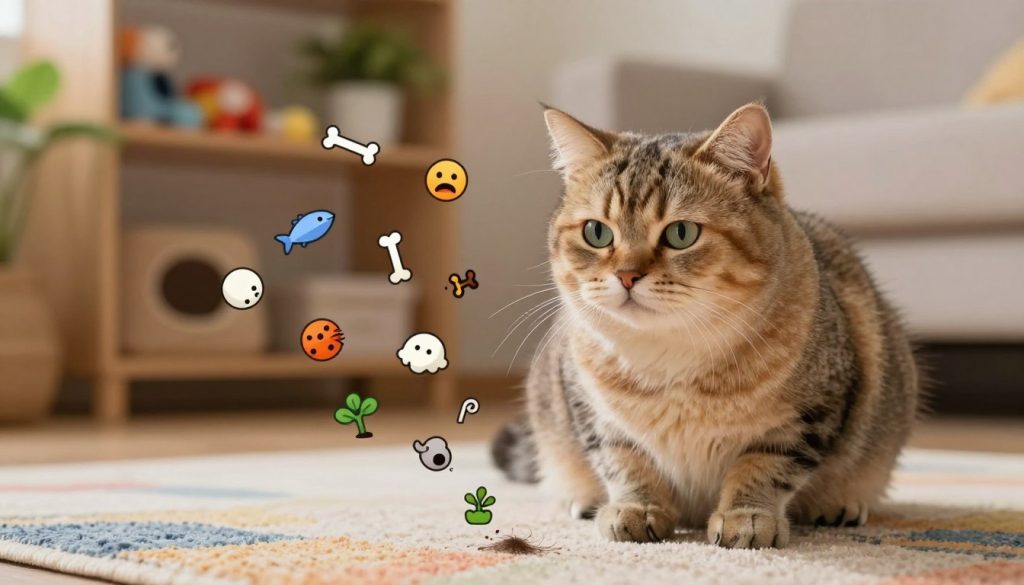
Several behavioral factors can cause your cat to vomit. Eating too quickly is a common reason, as it can lead to swallowing air or not chewing food properly. Hairballs are another frequent cause, mainly in cats that groom themselves a lot. Stress and anxiety can also trigger vomiting in cats. Identifying these behavioral triggers can help you take the first steps towards addressing the issue.
By understanding the difference between vomiting and regurgitation and recognizing common behavioral triggers, you can better identify why your cat is vomiting and take appropriate action.
Identifying Potencial Dietary Causes
Diet plays a big role in your cat’s health. Changes or sensitivities can cause vomiting. Knowing what might be causing it can help you help your cat feel better.
Sudden Changes in Cat Food
Changing your cat’s food too fast can upset their stomach. Cats have sensitive stomachs. To avoid this, gradually introduce new food over 7-10 days, mixing it with their current food.
This slow change helps their stomach get used to the new food.
Food Allergies and Sensitivities
Cats can be allergic to common proteins like chicken, beef, or fish. Signs of an allergy include vomiting, diarrhea, itchy skin, and weight loss. If you think your cat has a food allergy, try a novel-protein or hydrolyzed diet.
These diets have unique proteins that your cat may not have tried before. This can help avoid allergic reactions.
Ingesting Foreign Objects or Toxic Plants
Cats like to explore by mouthing things. This can lead to eating foreign objects or toxic plants, causing vomiting. Make sure your home is cat-proofed by removing dangerous items or plants.
Common toxic plants include lilies, sago palms, and tulips.
By knowing these dietary causes, you can prevent or lessen your cat’s vomiting. Keep a close eye on your cat’s diet and environment to keep them healthy.
Recognizing Signs of Serious Illness
As a cat owner, it’s key to know when your pet is seriously sick. Vomiting can mean many things, from mild to severe. It’s important to know when your cat’s vomiting is a sign of a serious problem that needs vet help right away.
When to Seek Immediate Veterinary Care
If your cat vomits more than two to three times in a row, or shows other signs like diarrhea, lethargy, or pain, get vet care fast. These signs can mean a serious problem that needs quick treatment.
Warning Signs Beyond Vomiting
There are other signs your cat might be seriously ill, beyond just vomiting. Watching your cat’s overall health and behavior is very important.
Lethargy and Behavioral Changes
Lethargy, or a lack of energy, and changes in behavior are big signs of your cat’s health. If your cat becomes very withdrawn or shows depression, it could mean there’s a problem.
Changes in Appetite and Hydration
Changes in appetite and how much your cat drinks are also important signs. If your cat eats less or more, or doesn’t drink enough water, it can lead to dehydration and other problems.
Watching these signs closely and getting vet care when needed can really help your cat get better and stay healthy. By knowing these warning signs, you can make sure your cat gets the care they need quickly.
Step-by-Step Guide to Assessing Your Cat
If your cat is vomiting, it’s natural to feel concerned. By following a systematic guide, you can gather vital information to share with your veterinarian.
Step One: Observe the Frequency and Appearance
The first step is to observe how often and what your cat’s vomit looks like. Note how often your cat vomits and describe the color, consistency, and content of the vomit. This info is key to figuring out the cause. For example, if the vomit has blood or is yellowish, it might be a sign of a serious issue.
Step Two: Check for Other Symptoms
Look out for other symptoms too. Check if your cat is showing signs of diarrhea, lethargy, or loss of appetite. These symptoms can help pinpoint the cause of vomiting. For instance, if your cat has diarrhea, it could mean a stomach problem.
Step Three: Monitor the Environment for Toxins
Your cat’s environment is also important. Inspect your home for any toxins or hazardous substances your cat might have gotten into. This includes toxic plants, cleaning supplies, or harmful human foods. Keeping your home safe for your cat can prevent future problems.
By following these steps, you can give your veterinarian a detailed overview of your cat’s situation. This helps them diagnose the issue more accurately.
Managing Mild Cases at Home
If your cat is vomiting, it’s normal to worry. But, mild vomiting can often be handled at home. Knowing what to do can ease your cat’s pain and might stop a vet visit.
A Bland Diet for Recovery
For cats with mild vomiting, a bland diet is often suggested. This means feeding them simple, easy-to-digest foods for a day or two. Boiled chicken or plain rice works well. It helps calm their stomach and stops more vomiting.
Start by mixing a bit of bland food with their usual meals. Slowly add more of it over a few hours. This helps avoid upsetting their stomach further.
Ensuring Proper Hydration
Proper hydration is key when your cat is vomiting. It can quickly lead to dehydration. Make sure your cat always has fresh water. You can also offer ice cubes or a bit of low-sodium chicken broth to help them drink more.
Watch how much water your cat drinks and their overall hydration. Look for signs of dehydration like dry gums, sunken eyes, and tiredness. If you see these, get vet help right away.
Monitoring Progress
Watch your cat closely for 24 hours. Check how often they vomit, what the vomit looks like, and how they act and eat. If they start to feel better, you can slowly add back their regular food.
If your cat doesn’t get better or seems really upset, like vomiting a lot, diarrhea, or being very tired, get vet advice. Your vet can figure out what’s wrong and suggest the best treatment.
Professional Veterinary Diagnostic Procedures
Cats throw up for many reasons. A vet can help figure out why your cat is vomiting. If your cat keeps vomiting or shows other bad signs, getting a vet’s diagnosis is key.
A vet will first do a physical examination to look for illness or injury signs. They will also ask about your cat’s medical history. This helps them find possible causes.
Physical Examinations and Blood Work
The vet will check your cat’s health, like weight and temperature. They will also feel your cat’s belly to find any problems. Blood work is also important. It shows if there’s infection, inflammation, or organ issues causing the vomiting.
Blood tests include a complete blood count (CBC) and blood chemistry tests. These tests check for infection and organ function, like the kidneys and liver.
Imaging Techniques Like X-rays and Ultrasounds
Imaging techniques like X-rays and ultrasounds are used too. They help find problems like foreign bodies or tumors. These tests are important for diagnosing.
An X-ray can spot foreign bodies or other issues in the gut. An ultrasound gives detailed views of organs. It can find problems like pancreatitis or gut disease.
Endoscopy and Biopsy Options
In some cases, an endoscopy is suggested. This lets the vet see inside your cat’s gut. They use a tube with a camera to look at the esophagus, stomach, or intestines.
If they find something odd, they might take a biopsy. This is to check the tissue more closely. It helps diagnose things like cancer or inflammatory bowel disease.
Preventative Measures for Long-Term Health
Keeping a regular feeding schedule, grooming your cat, and making your home cat-safe are key. These steps can help stop your cat from vomiting. They are simple but very effective ways to keep your cat healthy.
Feeding your cat at the same times every day is important for their health. Changes in when or what you feed them can stress them out and make them vomit. Stick to a routine for feeding times, types, and amounts. A consistent diet helps keep your cat’s digestive system in check, lowering the chance of vomiting.
Maintaining a Consistent Feeding Schedule
Feeding your cat at the same times every day helps them feel secure. It also stops them from getting stressed and vomiting. Also, don’t suddenly change their food. If you must, mix the new food with the old over a few days.
Regular Grooming to Prevent Hairballs
Grooming your cat is more than just making them look good. It’s also a way to stop hairballs, a common cause of vomiting. Brushing your cat regularly reduces the hair they swallow. For cats with hairballs, there are special tools and products to help.
Cat-Proofing Your Home Environment
Making your home safe for your cat is vital. Keep harmful substances and objects out of reach. Make sure your cat can’t get into areas with dangerous materials. Check your home from your cat’s point of view to find and fix any dangers.
By taking these steps, you can make your home safer and healthier for your cat. This reduces the chance of vomiting and other health problems. It’s all about being proactive and caring for your cat’s health.
Conclusion
Now that you’ve looked into why your cat might be vomiting, it’s time to act. Understanding why your cat throws up can be tricky. But by finding the cause, you can take steps to help them.
Spotting serious illness signs early and getting vet care when needed is key. Simple actions like regular grooming and a set feeding schedule can help. Also, making your home safe for your cat can lower the chance of them vomiting.
If you’re worried about your cat vomiting, knowing more is important. Watch your cat’s behavior and health closely. By following the advice in this article, you can make a big difference in your cat’s life.