Have you ever watched your fluffy buddy zoom through a pitch-black room without colliding with objects? It feels like absolute magic.
Felines have amazing ways to see in the dark. Nighttime navigation is their superpower.
Many owners wonder how well these pets see in the dark. You might notice glowing eyes staring back at you from dim corners.
Understanding your pet’s eyesight reveals hidden secrets. Kittens don’t need artificial lamps to find toys or kibble.
Evolutionary design made their eyes different from ours. Felines have a unique advantage for dusk survival.
Small movements become clear even in blackness. Let’s explore the science behind those wide pupils.
Discovering what happens beneath that surface clarifies their mastery of low-light habitats.
This extraordinary visual prowess defines their nature as nocturnal hunters.
Stay tuned to learn how cats can see in the dark. Your companion’s perceptions when lamps go out will surprise you.
Table of Contents
Can Cats See in the Dark: The Truth Behind Your Cat’s Vision
It’s often said that cats can see in the dark. But the truth is more complex. Cats can move around in dim light, but they don’t see in complete blackness.
Dr. Paul Miller, a vet ophthalmologist, explains that cats don’t see in total darkness. Yet, they can spot things much better in dim light than people can. This is because their eyes are made for low-light conditions.
Understanding What “Complete Darkness” Actually Means
Complete darkness means no light at all. In such a place, neither humans nor cats can see. But cats can spot things in very low light, making them great hunters at twilight.
Many think cats can see in total darkness. But the truth is, cats need some light to see, even if it’s just a bit.
The Minimum Light Your Cat Needs to See
Cats need very little light to see, thanks to their eye design. The amount needed is called the threshold of visibility. Below this, even cats can’t see.
Studies show cats can see in light levels six times lower than humans. This is because of their eye’s special features, like the tapetum lucidum and lots of rod cells.
These special features help your cat move and hunt in dark places that are too dark for humans.
The Amazing Anatomy Behind Cat Vision in Low Light
The secret to your cat’s night vision is in their eye structure. Cats have evolved to hunt at night. Their eyes have special features for low-light vision.
The Tapetum Lucidum: Nature’s Built-In Night Vision Device
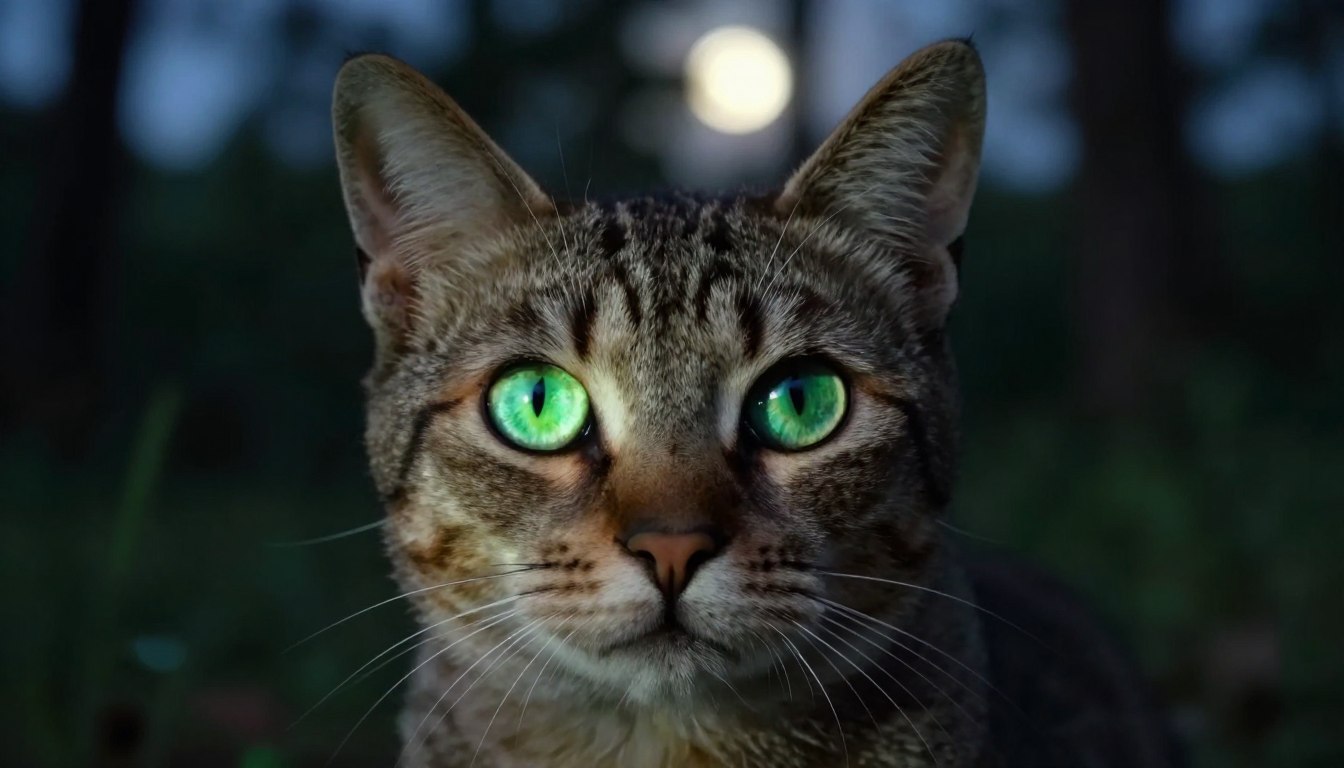
The tapetum lucidum is a key part of your cat’s night vision. It’s a reflective layer in the back of the eye. It reflects light back to the retina, giving it a second chance to absorb it.
This is why your cat’s eyes glow in the dark when light is shone into them.
Why Your Cat Has So Many Rod Cells
Cats have lots of rod cells in their retinas. Rod cells are better at seeing in low light than cone cells. Cone cells help with color vision.
This means your cat can see in very dim light. They can move and hunt in the dark, something humans can’t do.
How Those Vertical Pupils Make All the Difference
Your cat’s vertical pupils are also important. They help control how much light gets in. In bright light, the pupils get smaller to let less light in.
In low light, they get bigger to let more light in. With the tapetum lucidum and rod cells, your cat’s night vision is amazing.
Comparing Feline Night Vision to Human Eyesight
The difference in night vision between cats and humans is quite big. Humans find it hard to see in the dark, but cats can move around easily. This is because cats have better eyesight.
Just How Much Better Can Your Cat See in Dim Conditions
Cats can see much better in the dark than humans. Studies show that cats can see 5.5 to 7 times better than humans in dim light. This is because their eyes are made to let in more light.
Cats’ eyes are built to absorb more light. This lets them see in dark places that humans can’t. It’s great for hunting and moving around at night.
What Your Cat Gives Up for Superior Night Vision
Even though cats see better in the dark, they have some downsides. For example, their color vision is limited compared to humans. They can see blues and violets better than reds and greens, but their color range is not as wide.
Also, cats don’t see as much detail as humans. But this is a small trade-off for their amazing night vision.
- Cats can see better in low light due to their eye structure.
- Their color vision is limited compared to humans.
- They have lower visual acuity, but this is compensated by their superior night vision.
Busting Common Myths About How Cats See in Darkness
Have you heard myths about your cat’s night vision? What’s really true? Cats can move around in dim light, but many myths surround their vision. Let’s look at some common myths and find out what’s real.
The Total Darkness Myth: Why Cats Need Some Light
Many think cats can see in complete darkness. But, this isn’t true. Cats can see well in low light, but they need some light to see. Their eyes are made to use little light, but they can’t see in total darkness. Their eyes, like ours, need light to work.
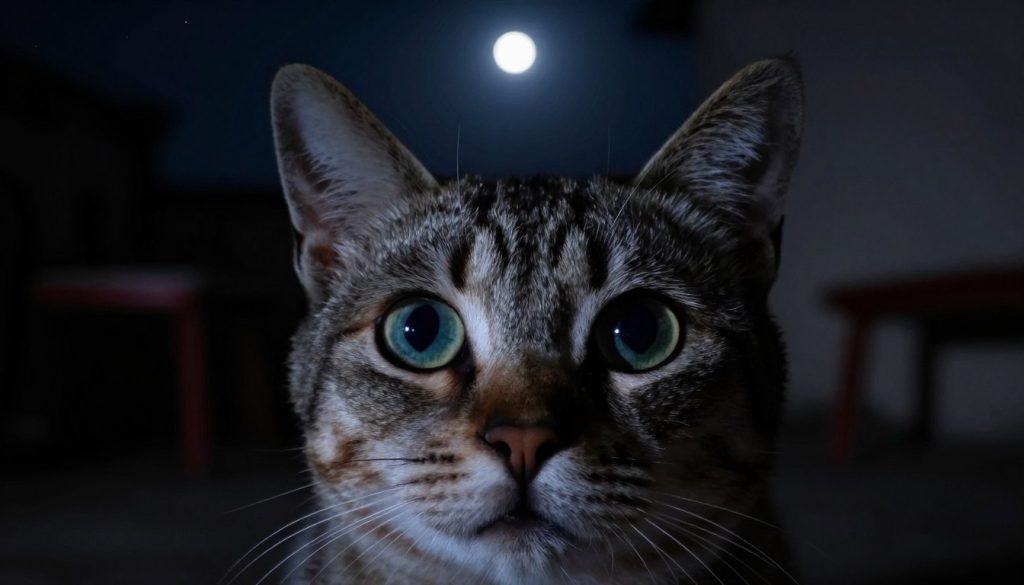
The special parts of their eyes help them use what little light there is. But, without any light, they can’t see any better than we can.
Do All Cats Have Equally Good Night Vision
Some believe all cats see equally well in the dark. While cats are good at seeing in low light, they’re not all the same. Things like age, genetics, and health can affect their night vision. For example, younger cats usually see better than older ones.
Can Older Cats See as Well in the Dark
As cats get older, their vision changes. Older cats might not see as well in the dark. This can happen because they have fewer rod cells or changes in their lens. Many older cats adjust, but it’s good to notice if they struggle in dim light.
Knowing how your cat sees can help you understand them better. Recognizing they’re not immune to vision problems helps you keep their space safe and comfy, even as they age.
What Your Cat’s Excellent Night Vision Means for You
As a cat owner, you’ve probably seen the midnight zoomies. It’s all because of their amazing night vision. This ability is fascinating and changes your daily life in many ways.
Knowing how your cat’s feline night vision affects their behavior helps you understand their needs better. It also helps you make your home more suitable for them.
Why Your Cat Zooms Around at 3 AM
Ever wondered why your cat is so active at 3 AM? It’s because of their superior low-light vision. They can see in the dark, which lets them hunt, play, and explore while you sleep.
This nighttime activity comes from their wild ancestors, who hunted at night. So, when your cat zooms around at 3 AM, it’s because they can see their surroundings clearly and feel comfortable moving around.
How Your Cat Navigates Your Home After Bedtime
Your cat’s night vision lets them move around your home easily, even in complete darkness. They can avoid obstacles, find their favorite spots, and even catch toys or prey with precision.
This skill to move around confidently in the dark comes from their exceptional visual capabilities. This is supported by a reflective layer in the back of their eyes called the tapetum lucidum.
Should You Keep Lights On for Your Cat at Night
Whether to keep lights on or off for your cat at night depends on several factors. While your cat can see in low light, they need some light to navigate effectively.
When Night Lights Can Help Your Cat
- If your cat is older or has vision impairments, a night light can be helpful.
- For multi-cat households, a night light can reduce conflicts between cats.
- If your home has a complex layout or obstacles, a night light can aid navigation.
Times When Your Cat Prefers Darkness
While night lights can be beneficial in some situations, there are times when your cat might prefer darkness. For instance, some cats may feel more secure or relaxed in a completely dark environment.
Watching your cat’s behavior and preferences can help you decide whether to keep lights on or off. If your cat seems to navigate and behave normally in the dark, it’s likely they prefer it that way.
Conclusion
Your cat’s ability to move around and hunt in the dark is amazing. They can see very well in low light, thanks to their special eyes. But, they do need some light to see, even if it’s just a little.
Their eyes are built for night vision. They have a special layer and lots of rod cells. This lets them see better in the dark than humans can.
Knowing how your cat sees can help you understand them better, even at night. Remember, they don’t see in complete darkness. So, make sure their space is safe and comfy for them to explore.