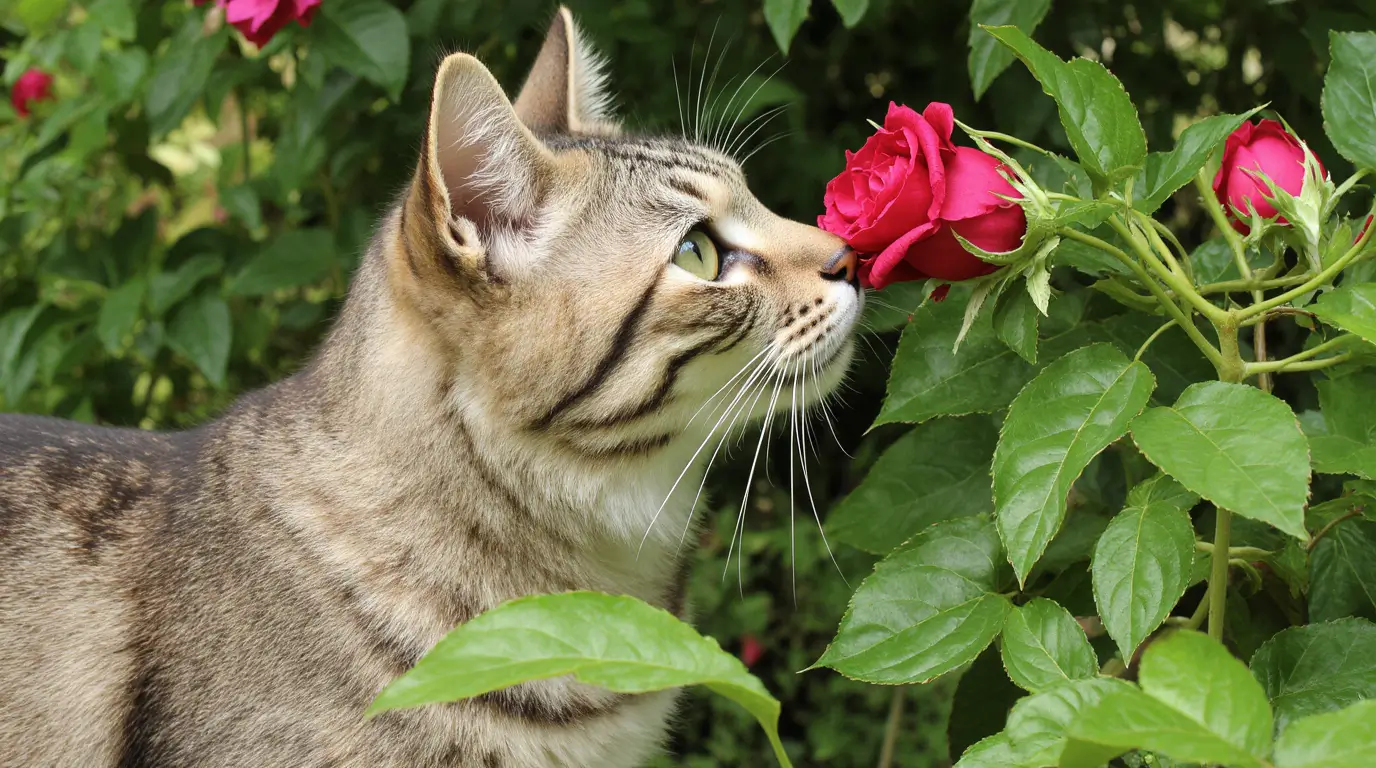
You love your cat and your garden. It’s important to keep your garden safe for your pet. If your cat eats a flower, don’t worry.
Your home is filled with beautiful colors and smells. Most garden flowers are safe for pets.
- Scientific data confirms that true roses lack internal poisons for pets.
- Sharp thorns and chemical sprays represent the primary physical hazards.
- Evaluating store-bought bouquets remains important due to possible pesticides.
Experts at the ASPCA say roses are safe for pets. But, cat safety around roses means watching out for more than just the flower. Be careful of sharp thorns.
Many worry when pets get close to flowers. The petals may look soft, but the stems can hurt.
Thorns can scratch your pet’s nose or paws. Many flowers sold in stores have harmful chemicals. It’s important to think about rose toxicity and the environment.
This guide helps you choose safe flowers for your pet. Learn how to keep your pet safe while enjoying nature. We want to give you peace of mind.
Table of Contents
Are Roses Toxic to Cats? Here’s What You Need to Know
Roses are a classic symbol of love and beauty. But if you’re a cat owner, you might worry about their impact on your pet’s health. The good news is that roses are generally safe around cats. Yet, there are some important details to keep in mind to ensure your home is safe for your feline friend.
The ASPCA’s Official Stance on Rose Toxicity
The ASPCA states that roses are not toxic to cats. This is reassuring for cat owners who enjoy having roses in their homes. According to the ASPCA, roses do not contain harmful substances for cats. This makes them a safe choice for pet owners.
Why Roses Are Considered Non-Toxic to Cats
Roses are considered non-toxic because they lack harmful substances that can poison cats. This characteristic makes roses a popular choice for homes with pets. They can be enjoyed without risking your cat’s health.
The Important Exceptions to This Rule
While roses themselves are non-toxic, there are important exceptions to consider. Here are some key factors to keep in mind:
- Sharp Thorns: Roses have thorns that can cause physical injuries to your cat if they come into contact with them.
- Pesticides and Chemicals: Store-bought roses may have been treated with pesticides or other chemicals that can be harmful if ingested by your cat.
- Other Possible Hazards: It’s also worth considering other possible hazards, such as fertilizers used on rose bushes or preservatives in cut flower arrangements.
Knowing these exceptions can help you take necessary precautions to keep your cat safe.
The Hidden Dangers Roses Can Pose to Your Feline Friend
Roses are beautiful but can be risky for your cat. They are not toxic, but other parts of roses can harm your cat’s health.
Knowing these risks is key to keeping your cat safe around roses. Here are some dangers to watch out for:
Sharp Thorns Can Cause Serious Injuries
Rose thorns are sharp and can hurt your cat. Cats might prick themselves while exploring or rubbing against roses.
- Puncture wounds from thorns can be painful and might get infected.
- Cats may feel pain or discomfort if thorns get stuck in their paws or skin.
- Deep puncture wounds might need a vet’s help.
Pesticides and Insecticides on Store-Bought Roses
Commercial rose growers use pesticides and insecticides. These chemicals stay on the roses when they’re sold.
If your cat eats or touches these treated roses, they could get sick.
- Common pesticides on roses include neonicotinoids and pyrethroids.
- These chemicals can make cats very sick, ranging from mild to severe symptoms.
Fertilizers and Plant Foods Around Rose Bushes
Fertilizers and plant foods for roses can be harmful if your cat eats them.
Many fertilizers have toxic ingredients like nitrogen, phosphorus, and potassium in high amounts.
- Keep fertilizers away from your cat to avoid accidental eating.
- Always read and follow the fertilizer instructions carefully.
Preservatives in Cut Flower Arrangements
Cut flower arrangements have preservatives to keep the flowers fresh. These preservatives can be toxic to cats if they eat them.
Common preservatives include chemicals like silver nitrate and ethylene glycol.
- Make sure your cat can’t reach cut flower arrangements.
- Use preservative-free flower arrangements or make your own flower food.
Signs and Symptoms to Watch For in Your Cat
Your cat might face health problems if they play with roses. It’s important to watch their behavior and health closely.
Roses can be risky for your cat, causing physical harm or poisoning. Knowing the signs can help you spot problems early.
Physical Injuries from Rose Thorns
Rose thorns can hurt your cat, causing scratches or deep wounds. These injuries can be painful.
Common symptoms of physical injuries include:
- Paw or skin lacerations
- Swelling or redness around the affected area
- Limping if the injury is on a paw
Gastrointestinal Issues from Ingestion
Eating rose petals or leaves can upset your cat’s stomach. While roses aren’t toxic, they can cause discomfort.
Symptoms to watch for include:
- Vomiting
- Diarrhea
- Lethargy or depression
Chemical Poisoning Symptoms
Cats can get sick from chemicals in treated roses. These can be harmful.
Signs of chemical poisoning can be more severe and include:
- Difficulty breathing
- Seizures or tremors
- Excessive drooling or foaming at the mouth
If you think your cat has been poisoned, get them to the vet right away.
What to Do If Your Cat Interacts with Roses
It’s important to know how to react if your cat touches roses. Roses aren’t toxic to cats, but they can cause harm. This includes injuries from thorns and poisoning from chemicals used on the plants.
First Aid Steps for Thorn Injuries
If your cat gets hurt by a rose thorn, act fast and carefully. First, gently restrain your cat to avoid more harm. Then, check the wound to see how bad it is.
For small cuts, clean with mild soap and water. But if the cut is deep or you’re not sure, ask your vet for help.
Actions to Take if Your Cat Eats Rose Petals or Leaves
If your cat eats rose petals or leaves, watch them closely. They might get sick, like vomiting or diarrhea. While roses are safe, eating a lot can upset their stomach.
If your cat gets sick, call your vet. Usually, the problems are mild and short-lived. But it’s always safer to check.
When Emergency Veterinary Care Is Necessary
Go to the vet right away if your cat has serious problems after touching roses. This includes trouble breathing, a lot of vomiting, or signs of poisoning. If you think your cat ate something bad or is very sick, get help fast.
Important Information for Your Veterinarian
When you talk to your vet, tell them everything you know. Say what kind of rose it was, how much your cat ate, and any symptoms. This helps your vet give your cat the best care.
How to Safely Enjoy Roses in a Cat-Friendly Home
With a few simple precautions, you can enjoy roses and keep your feline friend safe. Creating a harmonious environment where both your cat and your love for roses coexist is entirely possible.
Best Locations for Rose Displays and Arrangements
When deciding where to place your rose arrangements, consider locations that are out of your cat’s reach. High shelves or rooms that your cat rarely enters are ideal. This will minimize the chance of your cat coming into contact with the roses.
For bouquets and arrangements, consider using vases that are stable and won’t tip over easily. This will prevent accidental spills and reduce the risk of your cat getting injured by broken glass or coming into contact with the roses.
Choosing Organic and Untreated Roses
Opting for organic roses can significantly reduce the risk of exposing your cat to harmful chemicals. Organic roses are grown without the use of synthetic pesticides or fertilizers, making them a safer choice for homes with pets.
When purchasing roses, ask your florist about the cultivation methods used. Choosing roses that are labeled as “organically grown” or “untreated” can help minimize possible risks to your cat’s health.
Cat Deterrents That Actually Work
Using cat deterrents can be an effective way to keep your cat away from your rose arrangements. There are various deterrents available, including sprays and granules that can be placed around the roses to discourage your cat from approaching them.
- Sprays containing citrus or vinegar can be unpleasant for cats and deter them from getting too close to the roses.
- Placing double-sided tape around the vase or area where the roses are displayed can also be effective, as cats dislike the sticky sensation.
Safe Flower Alternatives Your Cat Will Ignore
If you’re concerned about the risks associated with roses, consider opting for safe flower alternatives that are non-toxic to cats. These flowers can add beauty to your home without posing a risk to your feline friend.
Cat-Safe Flowers for Your Home
Some flowers are safe for your cat to be around. These include:
- Orchids
- Sunflowers
- Daisies
Non-Toxic Plants That Look Beautiful
In addition to flowers, there are many non-toxic plants that can enhance the aesthetic of your home. Some options include:
- Spider plants
- Prayer plants
- Parlor palms
Conclusion
As a cat owner, you can enjoy roses in your home safely. Roses are usually safe for cats, but watch out for sharp thorns and chemicals.
To keep your cat safe, pick organic roses without chemicals. Also, place your roses where your cat can’t get to them. You might also consider other flowers that are safe for pets.
Knowing the risks and taking steps to avoid them helps. This way, you can have a beautiful home that’s safe for your pets and flowers.
With a bit of care and planning, you can make your home safe for cats. This includes enjoying the beauty of roses.