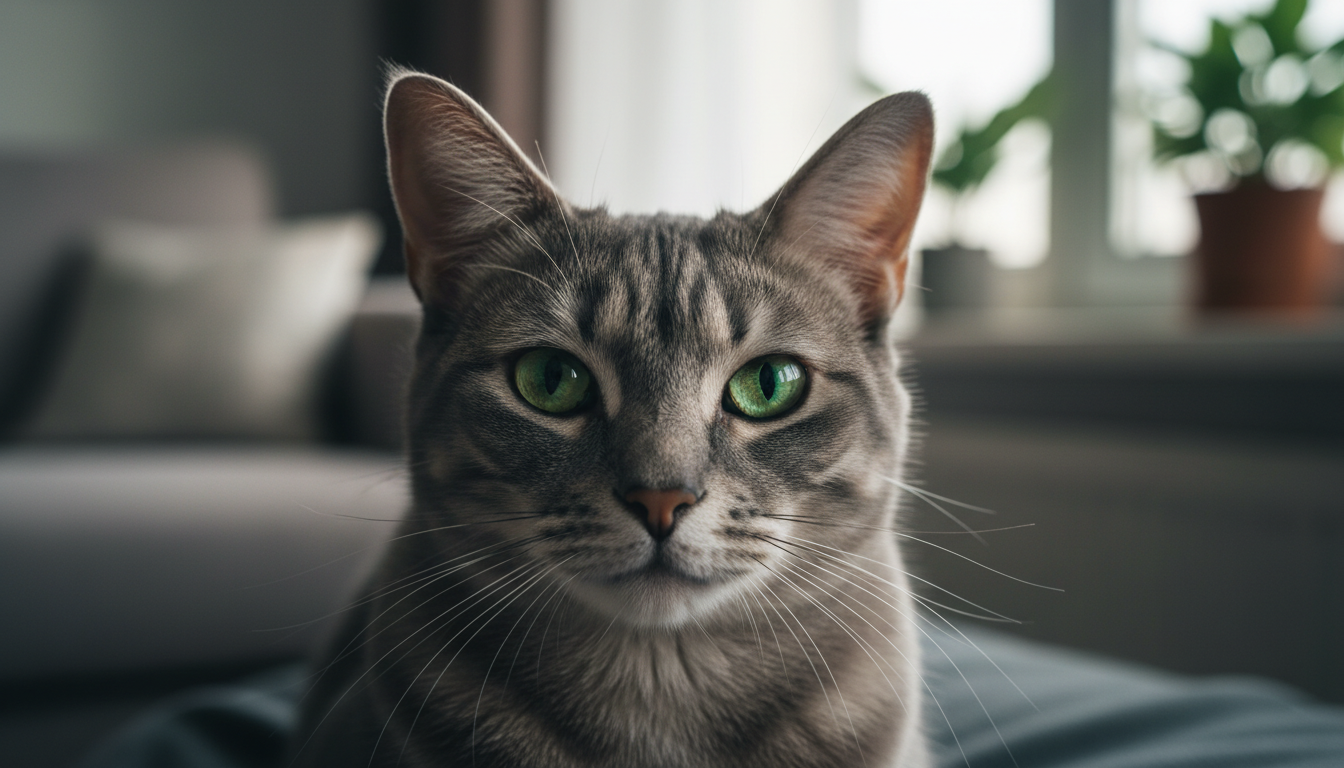
Ever noticed your cat staring at you without blinking? It’s quite mysterious when their big eyes meet yours.
This behavior often comes from deep instincts or a need for your attention. Understanding cat staring meanings can strengthen your bond with your cat.
We’ll look into how curiosity and love are behind these silent looks. Many pet owners wonder, why does my cat stare at me during quiet times.
Learning about interpreting feline eye contact helps you know when your cat wants snacks or loves you. These subtle signs can turn a confusing moment into a meaningful connection.
Every blink and gaze tells a story about your bond. Let’s dive into these complex behaviors to make your life as a pet parent better.
Table of Contents
The Science Behind Feline Eye Contact and Communication
Your cat’s gaze can be both fascinating and confusing. It makes you wonder what they’re thinking. Cats use eye contact to connect, observe, and communicate with us. Their stares can show curiosity, trust, or excitement.
Cats mainly talk through body language, and their eyes are key. Knowing how they use their eyes helps you understand them better. It also strengthens your bond with them.
How Cats Use Their Eyes to Communicate
Cats show many emotions and intentions with their eyes.
- A direct stare can be a challenge or a sign of assertiveness.
- Slow blinking is often a sign of contentment and trust.
- Wide eyes can indicate excitement or fear.
These visual cues help you understand your cat’s feelings and needs.
The Difference Between Cat and Human Eye Contact
Unlike humans, cats don’t always see direct eye contact as positive. For cats, a direct stare can seem aggressive or confrontational. Knowing this helps you understand your cat’s behavior better.
Some key differences include:
- Direct eye contact: Humans see it as confident, cats may see it as aggressive.
- Averting gaze: Humans may view it as submissive, but cats may use it to avoid conflict.
- Blinking: Humans blink to keep their eyes moist, and cats slow blink to show trust.
Understanding Your Cat’s Visual Perspective
Cats have a special visual system for hunting. They see well in low light and spot movement easily. But their vision is different from ours. Knowing how your cat sees the world helps you understand their behavior and reactions.
For example, cats are very sensitive to movement and changes. This can make them stare at things that seem harmless to us.
Why Do Cats Groom Each Other? Signs of Love, Care, and Dominance
Why Does My Cat Stare at Me: 7 Common Explanations
Cats stare at their owners for many reasons. Knowing these reasons can make your bond with your pet stronger. It helps you understand what they need and how to meet those needs.
Showing Love and Affection
One main reason cats stare is to show love and affection. They communicate differently than humans. Their way of showing love can sometimes be hard to understand.
The Slow Blink: A Sign of Trust and Contentment
A slow blink from your cat means they trust and feel comfortable with you. Blinking slowly back at them can make your bond even stronger.
Creating Emotional Bonds Through Gazing
Gazing helps cats form emotional bonds with their owners. Eye contact creates a deeper connection. This connection is linked to the “love hormone,” which is important for social bonding.
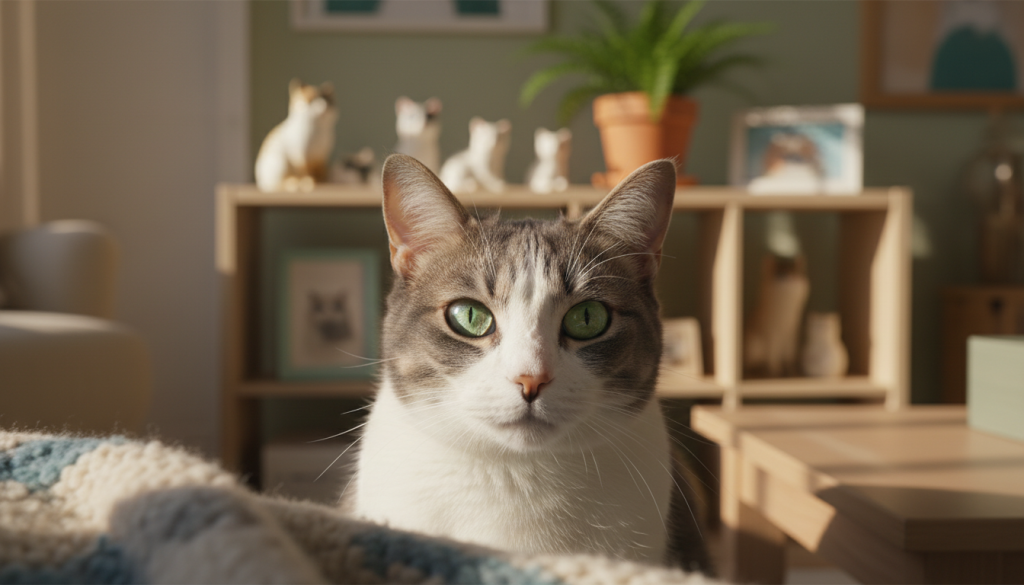
Communicating Needs and Desires
Cats stare to communicate their needs and desires. This can include hunger, thirst, or just wanting attention.
Signaling Hunger or Thirst
If your cat stares at you when it’s time to eat or when their water is low, they’re asking for food or water. Meeting these needs is important for their well-being.
Requesting Attention, Play, or Petting
Cats stare to ask for attention, play, or to be petted. If they stare intensely, it’s time to play or give them some affection.
Asking for Access to Favorite Spaces
Your cat might stare to ask for access to a room they can’t get to. They’re trying to tell you they want to go there.
Exercising Natural Curiosity
Cats are naturally curious. They stare because they’re interested in what you’re doing.
Observing Your Daily Routines and Habits
Your cat might stare as they watch your daily routines. They’re curious about your habits and want to understand and predict your actions.
Monitoring Your Activities for Changes
Cats watch for changes in your activities. If you’ve changed your routine, they might stare more to understand the reason.
Displaying Hunting and Predatory Instincts
Even though they’re domesticated, cats have natural hunting instincts. Their stare can show these instincts.
Asserting Dominance or Territory
In some cases, a cat’s stare is a way to show dominance or mark their territory. This is more common in households with multiple cats or pets.
Simply Being Comfortable and Relaxed in Your Presence
Lastly, your cat might stare because they feel comfortable and relaxed with you. They often choose to rest or relax near their owners, showing they’re content.
Understanding why your cat stares can give you a deeper insight into their behavior. It helps strengthen your bond with them.
Decoding Cat Body Language: What Different Stares Mean
Understanding your cat’s stare is a journey into their world of non-verbal communication. Cats use their eyes to show emotions and needs. Knowing these signals can deepen your bond with your pet.
The Soft, Half-Closed Eye Stare
A soft, half-closed eye stare means your cat is relaxed and content. It shows they feel comfortable and at ease with you. It’s a subtle way of showing love without being too pushy.
The Wide-Eyed, Dilated Pupil Stare
A wide-eyed stare with dilated pupils means excitement, curiosity, or fear. It shows they’re in a heightened state of arousal. This could be due to seeing prey, being startled, or feeling strong emotions.
The Direct, Unblinking Intense Stare
A direct, unblinking stare can seem assertive or aggressive. In cat language, it’s a challenge or threat. But it also means they’re intensely focused on something.
The Narrowed Eye Stare with Flattened Ears
When your cat’s eyes are narrowed and ears are flattened, it’s a sign of aggression or defensiveness. This posture shows they feel threatened or territorial.
The Stare Accompanied by Slow Blinking
Slow blinking while staring is a unique way cats communicate. It’s a sign of trust and affection. Cats only do this with those they feel comfortable with.
The Brief Glance Versus Prolonged Staring
The length of a cat’s stare can mean different things. A brief glance is just a quick check-in. But prolonged staring can show curiosity or even aggression.
By noticing the details of your cat’s stares and the context, you can understand what they’re trying to say. This strengthens your bond and helps solve any issues early.
Recognizing When Your Cat’s Staring Signals a Health Concern
A cat’s stare can show their health. It might mean they have a problem that needs attention. While cats stare for many reasons, some staring can mean they’re not feeling well.
As a cat owner, knowing when your cat’s stare is different is key. Understanding what their stare might mean can help you take care of them better.
Vision Problems and Eye Diseases
Staring can be a sign of vision issues or eye diseases in cats. Cats rely a lot on their sight. Any problems can change how they act.
Cataracts and Age-Related Vision Loss
Older cats might get cataracts or lose their vision. If your cat stares a lot or runs into things, they might be losing their sight. Cataracts make a cat’s eyes look cloudy or opaque and can cause blindness if not treated.
Retinal Issues and Blindness
Problems with the retina, like detachment or atrophy, can also make cats stare. These issues can lead to blindness if not treated. If your cat stares at walls or seems to stare at nothing, see a vet.
Cognitive Dysfunction and Dementia in Cats
Cognitive dysfunction, like Alzheimer’s, can affect older cats. It can make them stare a lot and change their behavior. If your older cat stares a lot or seems confused, see a vet.
Neurological Disorders Affecting Behavior
Neurological problems, like epilepsy or brain tumors, can make cats stare differently. Seizures or staring fits can mean there’s a brain issue. If your cat stares a lot or has seizures, get them to a vet right away.
Stress, Anxiety, and Behavioral Changes
Stress and anxiety can also make cats stare more. Cats under stress might stare a lot or act differently. Finding out what’s stressing them and making their environment calm can help.
Knowing about these health issues and watching your cat’s behavior can help them stay healthy and happy.
Conclusion
Exploring why your cat stares can help you understand them better. It also strengthens your bond. Think about the situation and their body language to figure out what they mean.
Cats stare for many reasons, like showing love, curiosity, or even health issues. Paying attention to these moments helps you understand their feelings and needs.
Watching and talking to your cat more will help you know them better. This knowledge makes your relationship with them more meaningful and caring.
Note: This article is for informational purposes only and does not replace professional veterinary advice. Always consult a vet for an accurate diagnosis and treatment for your pet.